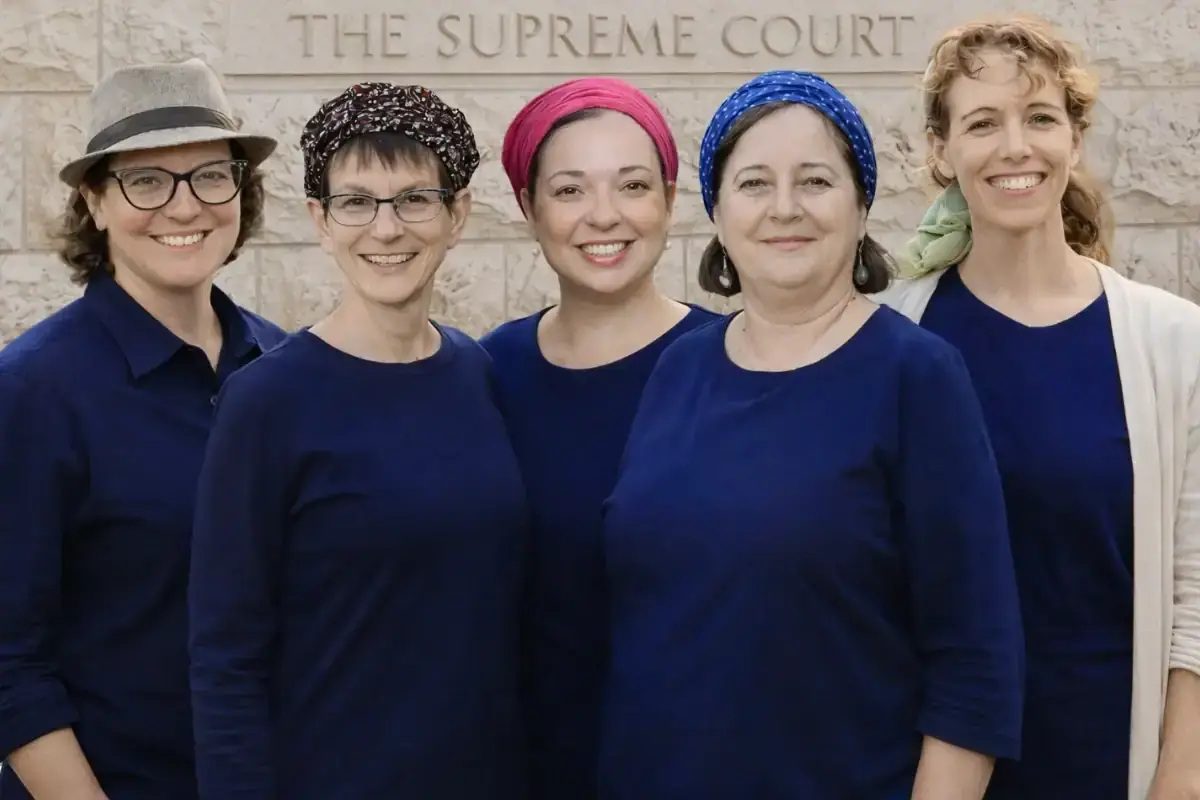

A male journalist.. interviews the spouses of female halakhic teachers about coping with the historic shift in which women become halakhic addresses and authorities in broad fields.
Adam Katz, interviewed about his experiences as the spouse of Rabbanit Sarah Segal-Katz: “People turn to her for matters requiring discretion, so she doesn’t share many work details with me,” says Katz. “However, she tells me that increasingly she hears married couples saying they seek halakhic answers to their questions – and for them, rabbinical authority is rabbinical authority. It doesn’t matter if a rabbi or rabbanit answers them, as long as they are properly tested halakhic teachers.”
“I don’t feel I carry a heavier burden,” says Katz. “We both leave for work in the morning and share housework and childcare. Of course there are busier periods, during studies and wedding seasons. Then I do more, but generally I don’t think I do more than her at home – the children and home are important to both of us.”
He emphasizes that women studying halakha is a revolution whose time has come: “This permeates over time. Women are as smart as men, even more so. There’s no reason women shouldn’t study halakha.”
“One difference is the work hours,” explains Katz. “Halakhic questions can arrive at all hours. Sometimes women encounter questions at twilight and must reach a decision. This isn’t something other freelance professionals encounter.”
Other spouses were interviewed for the article, some rabbis themselves and some in other fields:
Rabbi Yoel Frank, head of the Beit Midrash at Ariel University, admits the family pays a price for his wife Hani’s work as a halakhic advisor, but emphasizes: “The benefit far exceeds the loss – this is the imperative of our time, it cannot be that only in Torah women remain behind.” However, he believes in maintaining gradualism: “We mustn’t push too hard as it creates antagonism, we must let the feminist revolution occur gently.”
Ari Kraus, an optics engineer whose wife Batya is a halakhic advisor, declares with a smile: “I insist they call me ‘the Rabbanit,'” adding that calls to his wife cover all areas – Shabbat, kashrut, and purity. “We’re an egalitarian family. Whoever wants to stay behind – let them. We’re so beyond the storms in the religious sector.”
Rabbi Yehuda Kroyzer from Mitzpe Yericho, whose wife Shlomit answers Neshmat’s hotline, believes women should focus on purity matters: “Purity involves much modesty, so it’s more appropriate for a woman to answer a woman.” He warns against lack of boundaries: “The great danger is not setting limits to capability.”
Rabbi Benny Lau says that in family purity matters his wife Noa, who coordinates Neshmat’s halakhic advisors program, is the authority at home: “I transfer questions to Noa, her halakhic, medical, and gender knowledge far exceeds mine.” He supports full women’s integration: “A woman whose soul desires Torah and specializes in this world becomes a full partner in halakhic thinking and ruling.”