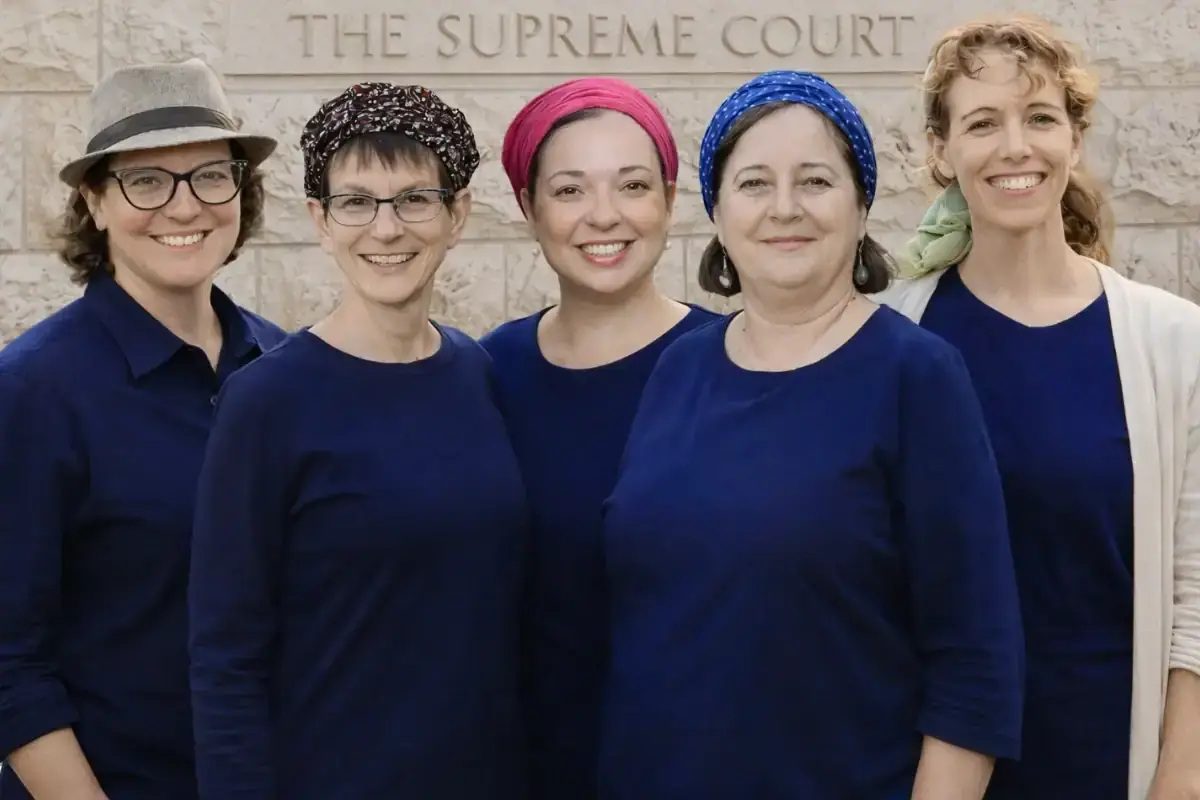

A column for this week’s parasha has been published in the Times of Israel blog, authored by Rabbanit Sarah, here is a brief summary:
In Parashat Ki Tavo we encounter a verse that marks a turning point in consciousness: “Yet the Lord has not given you a heart to know, eyes to see, and ears to hear, until this day” (Deut. 29:3). The parasha describes a state in which the heart, the eyes, and the ears had functioned only partially until now, and from this moment a new gateway of awareness opens: responsibility for one’s actions—for blessing or for curse—more sharply defined than before, as Israel prepares for a new chapter in its history.
Rabbanit Sarah Segal-Katz offers a reading of this verse against the backdrop of the conclusion of Deuteronomy, the end of the Hebrew year, and the vigilance and struggles since the October 7 attack and the ongoing war. She asks how this experience is reflected in our own lives: moments when our understanding seemed settled, until a sudden shift reinterprets both past and future. This year such reflection takes place under the weight of collective trauma—war, hostages not yet returned, destruction and loss. Reality does not permit a simple return to routine; it demands carrying complexity—fear and hope, fracture and the possibility of repair. The sights we have seen, the feelings we have carried, the voices we have heard, have reshaped us and changed how we understand the world.
The essay suggests that the opening of heart and senses is not a sign of serenity but of the capacity to hold pain, trauma, and faith together. Precisely through recognizing the darkness, a path toward light becomes possible—as Isaiah’s haftarah proclaims: “Arise, shine, for your light has come” (Isa. 60:1). Alongside poetry and prayer written in response to our present events, the piece offers a way to inhabit the consciousness of closure—of Deuteronomy, of the Hebrew year—while standing before the Days of Awe after two devastating years.
The d’var Torah interweaves the voices of contemporary creators: poet Tamara Lilach Mezuman, who portrays the terror of darkness as a force greater than love and even than God; poet Iris Elya-Cohen, who writes from a place of unknowing and inner fracture yet gestures toward renewed faith; and Rabbi Oded Mazor, who transforms devastation and collapse into a prayer for the strength to hold both pain and hope.
Thus, Parashat Ki Tavo—in dialogue with the poetry and prayers of our own time—calls for inner renewal precisely in days of reckoning, fear, and trembling. Even out of the fracture, a door to hope opens: “And the days of your mourning shall be ended” (Isa. 60:20).