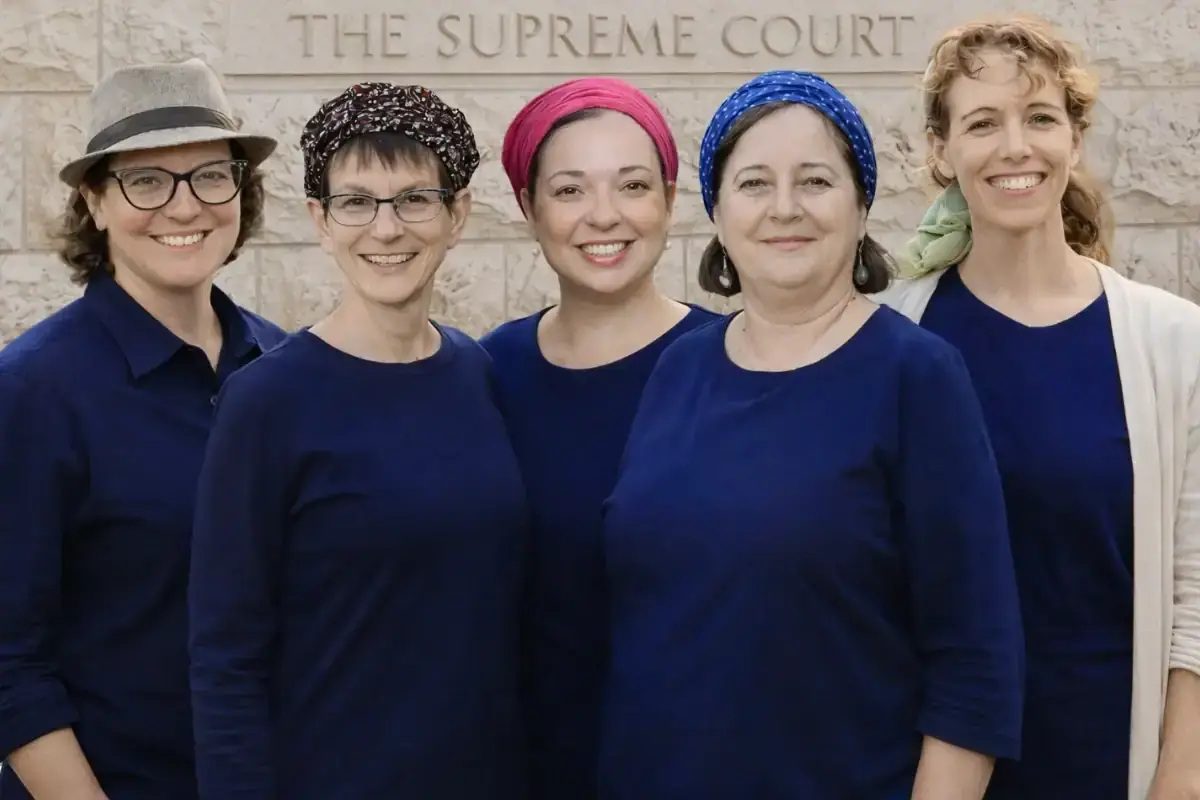

In her new blog post on Parashat Nitzavim, Rabbanit Sarah Segal-Katz offers a renewed reading of one of the Torah’s brief yet profoundly concentrated and weighty portions. On the day of his death, Moses gathers the entire people, and—according to Rashi—summons them for words of summation and direction, “from the hewer of thy wood to the drawer of thy water,” in one inclusive covenant. At the heart of his address stands the striking proclamation: “It is not in heaven… nor is it beyond the sea… but the word is very near to you, in your mouth and in your heart, that you may do it” (Deut. 30:12–14). These verses are not presented as a distant or mystical promise, but as an invitation: responsibility for mitzvot and for building the world rests with us, here and now.
Rabbanit Sarah highlights the dialectic of nearness and distance: the heavens and the sea symbolize infinite remove, yet the Torah stresses that Go-d’s word is accessible. This juxtaposition may provoke frustration—if it is so near, why do we fail to realize our aspirations? Moses himself, gazing upon the land yet barred from entering it, embodies this paradox.
The essay further situates the parasha within the spiritual arc of Elul, the weeks of consolation following Tisha b’Av, and the approach of the Yamim Nora’im culminating in the Ten Days of Repentance. Set against Israel’s harsh reality since October 7—with anguish for the hostages, grief for the fallen, and existential questions—the blog interlaces contemporary poetry. Works by Gali Ravitz and Yael Blankind Eran resonate with the imagery of the horizon: at once distant and near, offering inspiration that sustains hope.
Thus, through Torah and poetry alike, emerges a call to live with responsibility and compassion, to plant hope close at hand, and to find the strength to believe in the world’s continual renewal.