Halacha
"The Rabbinate exams aren't Halakhic, they're administrative." said Rabbanit Sarah Segal-Katz
For the first time in Israel's history: Rabbinate exams open to women. A historic victory after 7 years — but the fine print raises concerns
The laws of purity for postpartum women are in some ways similar to the regular laws of niddah, but not completely so. The purity laws concerning a woman who has given birth are set forth in the Bible, but applied halakhic rulings are very different.
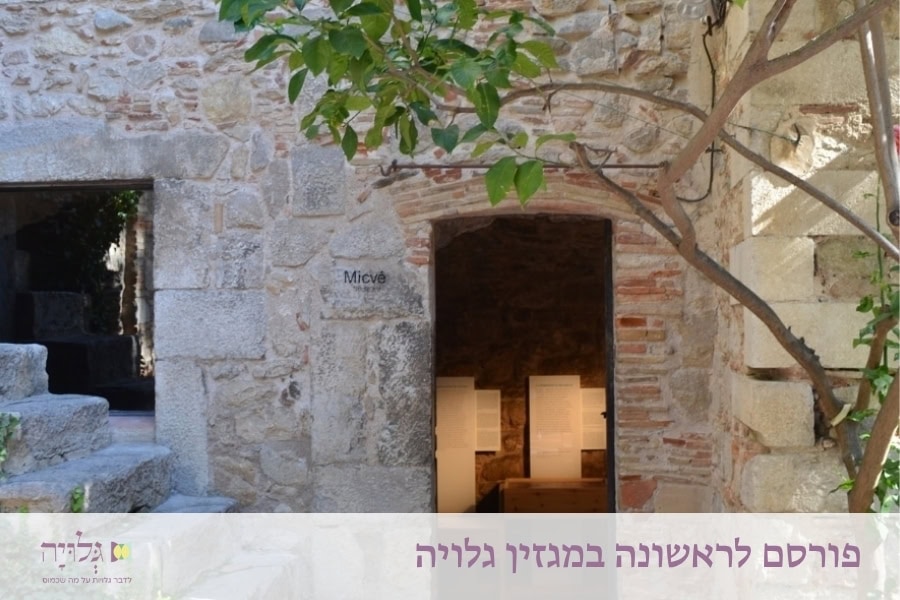
Transitioning from the state of niddah to purity requires immersion in the mikveh. At the same time, some women wish to immerse for reasons not required by halakhah, such as personal moments or unique events. This article presents a variety of voluntary immersion occasions and offers an invitation to transform one’s immersion into a personal celebration.
Desire and passion play an integral role in our lives. For religious couples, these concepts must be viewed in the context of halakhic obligations—the obligation to fulfill desire, on the one hand, and the obligation to restrain it, on the other. Various halakhic discussions address the desire for a physical relationship that is at once fulfilling and accords with the demands of halakhah.
Until recent years, brides were required to present proof of baptism in a Mikveh as part of the marriage registration process at the rabbinate. Until this requirement was removed. What is the background and reasons for this significant change?
The timing of mikveh night is considered fixed and, seemingly, should not be postponed. However, various situations can make it difficult to immerse at the appointed time, such as time management, planning, transportation, social and professional commitments, and so on. During the COVID-19 pandemic, immersion also entailed additional concerns, among them special guidelines, mandatory isolation, and a general lockdown. In this article, I explore the issue of immersing at the appointed time versus the possibility of postponing immersion and offer practical suggestions.

Just as we place great importance on words of intimacy and affection between spouses, we should also value the words that are meant to signify the separation between them during the days of niddah. Here are some suggestions for reflection on our choice of words that may assist in communicating the distancing message.
Dealing with technical questions such as the frequency of intercourse may sound harsh, but focusing on halachic details opens a conversation about marital responsibilities.
When a woman turns to a female halakhic teacher (morat halakha) or advisor (yoetzet halakha), the responder fulfills two “roles” that were, in the past, separate from one another: she serves as both a halakhic authority and a woman. The combination of these roles in one figure brings to our world a new reality that did not exist in the distant past. In this article we will discuss the unique contributions, challenges and opportunities of women who respond to questions in the realm of niddah.
The nature of eros is to arise not necessarily when we want or plan it to. It can appear in a variety of unideal moments; the following is a suggestion to feel the internal commitment to the commandment of onah, when it reveals itself and seeks to quench its thirst and know its place.
Premarital preparatory sessions not only teach halakhah but also provide tools for a successful relationship. When only the bride accumulates important knowledge before the wedding, leaving the groom behind, this can create a disparity between the partners. However, attending joint preparatory sessions may also create a need for separate meetings. Discussing the various options can help couples consider what the best choice for them is: preparatory meetings for the bride and the groom or joint sessions, either fully or partially.
The mikveh attendant should show extreme sensitivity toward the woman who is immersing, enabling her to fulfill the mitzvah according to her customs and practices so that she can return to her home and marital life in purity, tranquility, and fulfillment. Being a mikveh attendant in a private mikveh can create a singular reality.
Why has studying the laws of niddah become the most urgent task for an engaged couple? Is that subject truly the sole significant statement that Jewish halakhic thought has to offer regarding the physical connection between a couple? It would be better for premarital guidance to begin with what is permitted—the mitzvah of marital relations—and only then take up the subject of what is prohibited.
Can a woman immerse in natural water sources? If so, what solutions are available to common concerns that arise in this regard?
The decision of what Mikve means to each woman, is no less important than the actual tevilla itself.
“Immersing in Tranquility” is an online space created to discuss the mikveh experience, to learn and talk about halakhah, sexuality, feminism, and immersion itself.
The Gemara attributes the continuity of Jewish tradition to the transmission of knowledge and skills from father to son. But what about the mother and her daughter? Nowadays, brides commonly receive guidance from a certified bridal instructor rather than directly from their mother. Is this truly the ideal approach, or is there a better alternative?
The desire to remain in a state of purity leads women to impose unnecessary restrictions on themselves and, at the same time, to neglect their bodies. How can one strike a balance between different needs and desires without being overly stringent on the one hand and without denying the body on the other?
The laws of niddah are taught by women and stem from the woman’s body, but they directly impact the lives of both partners.