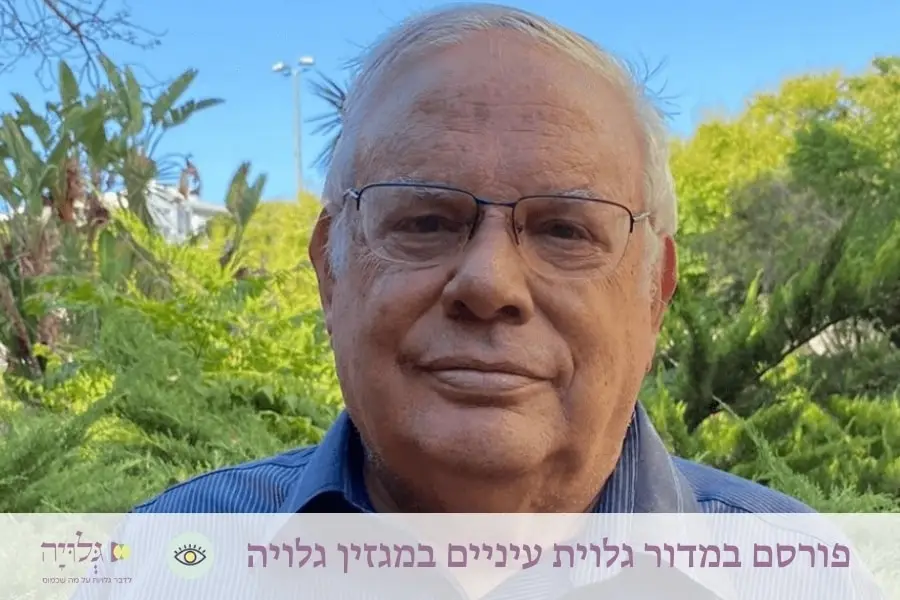
“Worthy memory empowers rather than weakens. It adds hope instead of despair” — An Interview in Gluyat Eynayim (Eyes Wide Open) columnin Gluya Magazine with poet Martin Herskovitz, founder of the Creating Memory initiative. Born in the United States in 1955 to a mother who survived the Holocaust, Herskovitz immigrated to Israel with his wife and children in 1986. Over the years he developed a unique path for processing both familial and collective trauma through poetry.
In the interview, he recounts how in the 1990s, while seeking ways to cope with heavy emotional burdens, he turned to second-generation support groups and discovered poetry as a medium for expression. Poetry soon became, in his words, “a means of survival—I have a feeling I want to express, and I find I can express it through poetry.” His chief influences include Robert Frost and Mary Oliver in English, and Yehuda Amichai in Hebrew, from whom he learned the power of direct, unadorned language.
His initiative, “Creating Memory” (=״Yotzrim Zikaron”), offers workshops that invite participants to engage with Holocaust themes through personal creative expression. Alongside his Hebrew poetry collection Shnot Dor (Generational Years, 2023), his English volume Son of the Shoah was published in 2025 by McFarland.
Herskovitz envisions transforming Holocaust memory from a static trauma into a processed, personal, and life-giving memory—one that empowers and instills hope, rather than leaving us imprisoned in fear. In this way, his personal story connects with broader questions of society, identity, and healing.