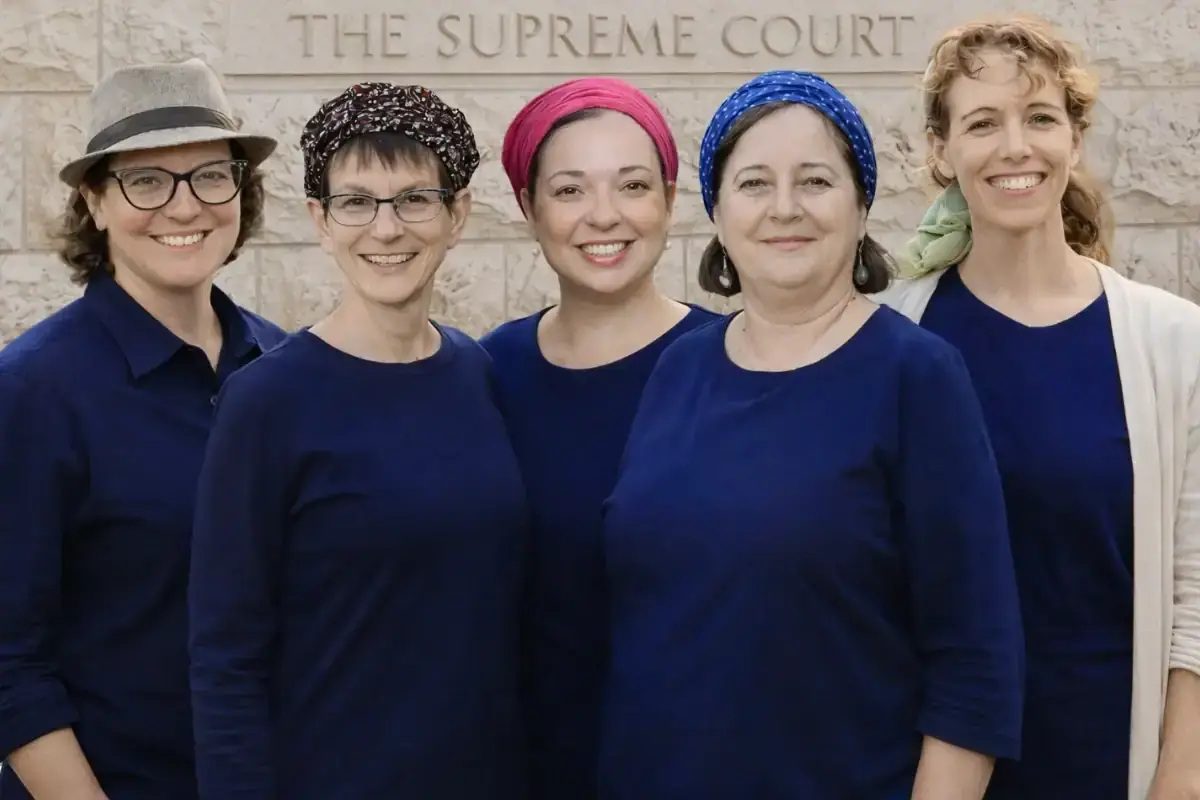

A committee convened in the Israeli Knesset addressed the requirement imposed on women to undergo bridal guidance as a condition for registering their marriage with the Rabbinate and for receiving the official marriage certificate after the wedding. The discussion focused on the lack of choice inherent in this obligation, which applies solely to women, and on the fact that the content of the instruction is limited exclusively to the laws of niddah.
During the session, Rabbanit Sarah Segal-Katz highlighted the problems in the current framework:
“When I meet a bride or a couple who arrive without genuine willingness, it looks entirely different from those who come out of their own desire. I have met divorced and widowed brides marrying for the second or third time, and I feel uneasy having to provide them with compulsory instruction.”
Drawing on her extensive experience in preparing brides and couples across the full spectrum of Jewish identities—religious, secular, traditional, ultra-Orthodox, and couples with differing Jewish backgrounds—Rabbanit Segal-Katz shared practical insights. She proposed that premarital guidance, encouraged by the religious councils and the Ministry of Religious Services, could take diverse forms: halakhic instruction, relationship counseling not dependent on halakha, financial guidance, or a combination thereof.
This proposal, reflecting the position of the organization Kolech, sought to transform what is currently a compulsory encounter into a meaningful and relevant opportunity for every couple, grounded in respect and genuine choice.