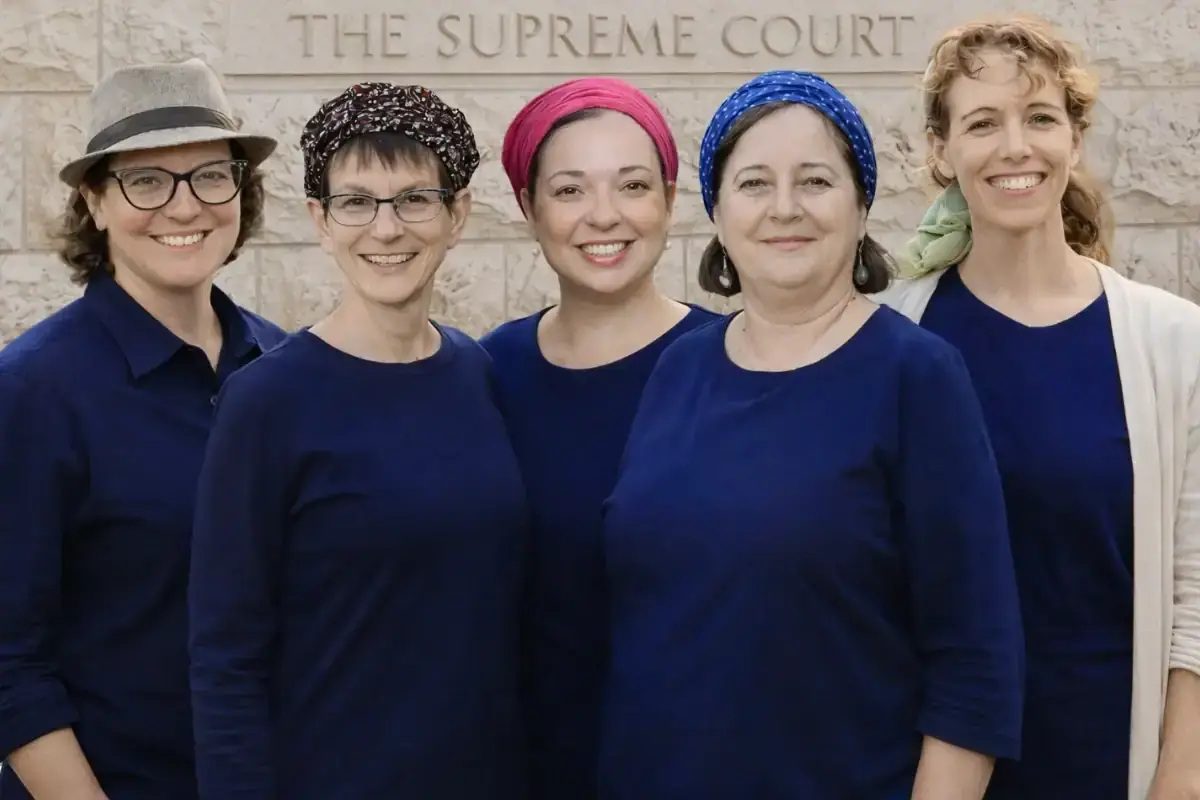

To mark the publication of her debut poetry collection, “What Determines Is the Gaze”, we spoke with poet and clinical psychologist Ora Barkan about language, creativity, migration, and belonging. An Israeli living in California, Barkan writes from a dual vantage point—between presence and distance, between the concrete and the poetic. She describes writing as an existential drive, echoing Winnicott’s conception of creative impulse, and seeks to integrate that drive into the fabric of everyday life.
Barkan’s poetic language is direct, often unadorned, interwoven with subtle humor and irony. Her poems move between intimate moments and existential or civic questions, exploring marginal relationships—familial, cultural, geographic—alongside a reflective gaze on the body, time, and language. She writes about connection and disconnection, the search for home, and the shifting terrain of identity. For Barkan, Hebrew is a rooted language—even when spoken in foreign soil.
In the interview, Barkan discusses her writing process, the importance of regular creative practice regardless of inspiration, and the liminal states where poems often arise: between sleep and wakefulness, between nature and awareness. She emphasizes the value of maintaining a “beginner’s mind,” even at later stages of craft.
A central piece in the book, “Hair–Monodrama,” addresses female hair loss and offers a nuanced, compassionate lens on the aging female body and the pressures it endures. For Barkan, writing is not merely an act of expression—it is a form of witnessing, and a space where healing may become possible.