
Ahead of the activity week of Israeli Rabbinate, dedicated this year to the theme “Torah, Leadership, and Choice,” Rabbanit Sarah wrote about the frustrating reality of the past six months: it has simply been impossible—for both men and women—to register for the Halachic examinations of the Chief Rabbinate of Israel.
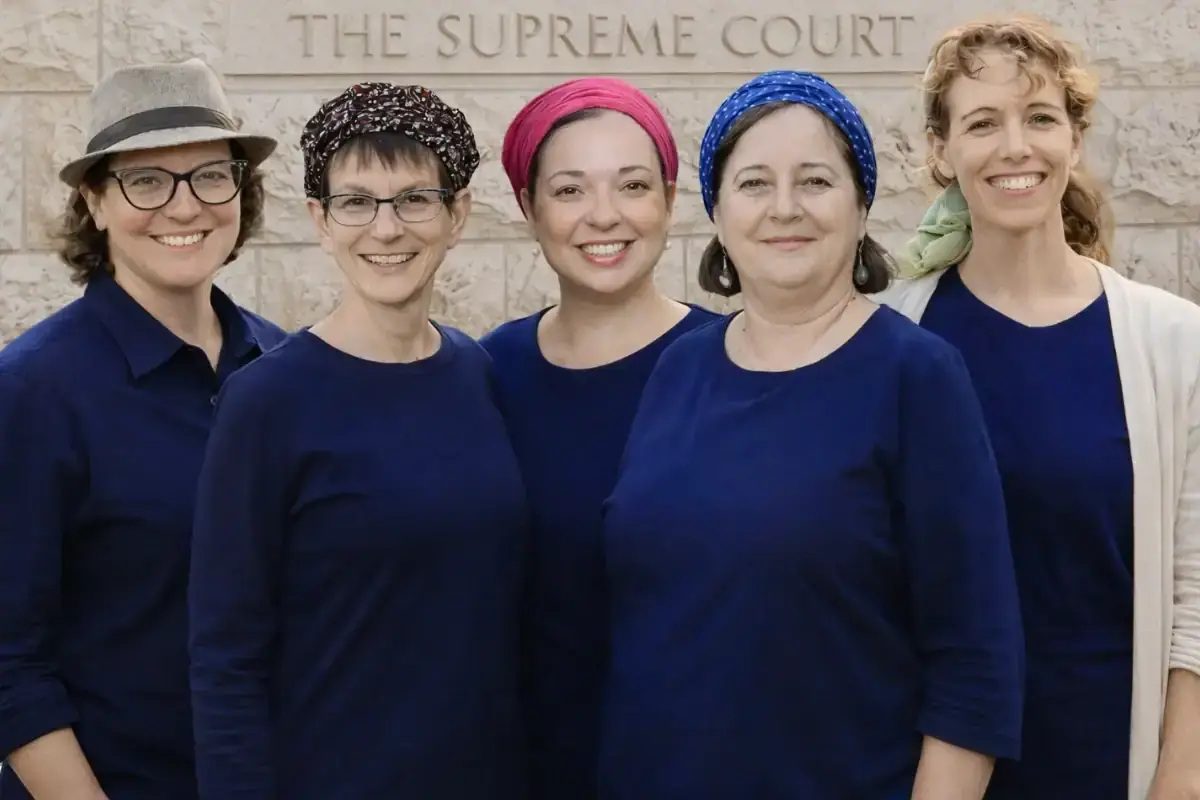
This situation began not long after a landmark victory in a petition to the High Court of Justice (Bagatz). In a clear and unequivocal ruling in July 2025, the Court required the Chief Rabbinate to allow women, like men, to sit for the Halachic exams. The three justices—Noam Sohlberg, Daphne Barak-Erez, and Ofer Grosskopf—ruled unanimously that a state institution may not discriminate on the basis of gender.
Yet instead of implementing the ruling, the Chief Rabbinate chose an extreme response: it removed from its website the option to register for the exams altogether—blocking access for everyone.
In her op-ed, Rabbanit Sarah connects this issue to Parashat Mishpatim and to Ma’amad Har Sinai, where it is written, “So shall you say to Beit Yaakov and tell Bnei Yisrael”—women and men alike received the Torah. The justices themselves drew a parallel between the petitioners and the daughters of Tzelofchad, who turned to the proper authority and corrected an injustice.
She reflects on the ethical standards expected of us all—and certainly of a state institution—and expresses hope that the gates of the examinations will, in practice, be reopened.
Although the petition lasted nearly seven years, it ultimately prevailed. It can also be seen as part of a broader series of petitions that have successfully expanded women’s participation in the public-religious sphere: on Religious Councils, as Toanot Rabaniyot, as Mashgichot Kashrut, and more.
Ahead of this same week of activity, Rabbanit Sarah again addressed these past six months, during which registration for the Chief Rabbinate’s Halachic examinations has remained closed—to men and women alike.