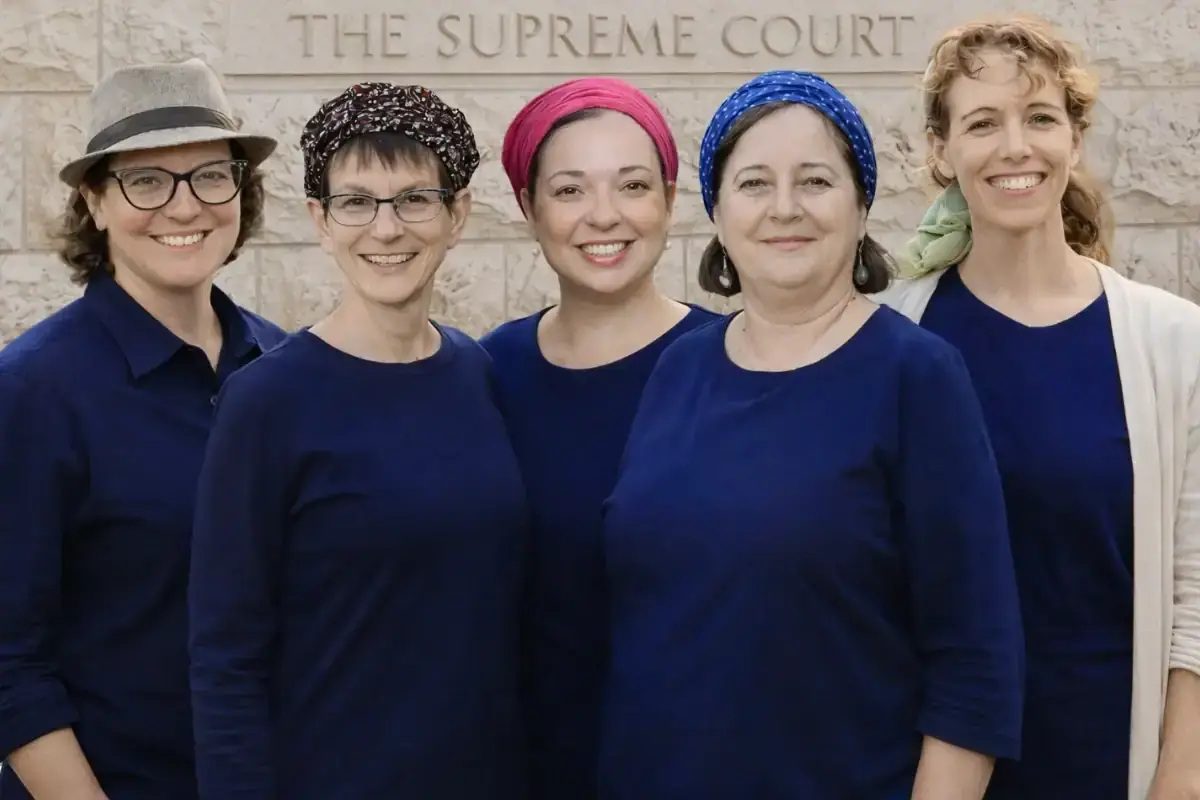
The Chief Rabbinate is seeking to advance a partial-access framework for women regarding its ordination examinations: women would be permitted to sit only two subjects within the Rabbinate’s own system—the laws of Shabbat and niddah (family purity)—together with a request to the High Court of Justice (HCJ) for an additional (further) hearing and a stay of execution of the ruling that requires equal access to the exams. In its filing, the Rabbinate argues that there are “relevant differences” between men and women with respect to Torah study and rabbinic ordination, and asks that the upcoming exam cycle be held under the old format for men only.
These applications come three months after the HCJ ruled that the Rabbinate must open its exams to women and end gender-based exclusion. As the petition and judgment made clear, the examinations—and the Yoreh Yoreh certificate earned after six tests—carry significant employment and educational implications, including equivalency to an academic degree under certain conditions and use as a prerequisite in public-sector tenders. Accordingly, exclusion of women from a state-administered system is impermissible.
The report notes opposition to the Rabbinate’s move. Rabbanit Sarah Segal-Katz, one of the petitioners, is quoted (via Ynet) as saying: “The Chief Rabbinate’s request for an additional hearing pushes us backward. Even the attempt to present the distinction based on whether women are exempt from some [Torah] commandments does not justify preventing them from learning the subjects or being tested on them.”
Also cited is sharp criticism from Rabbi Dr. Seth Farber, founder and head of ITIM, who argues that the request advances embarrassing claims about women’s status and capacity to study Torah, and that there is no justification for reopening the decision or delaying its implementation.
Given the public and legal ramifications, the call is to implement the judgment on equal terms, rather than institutionalize a partial solution that would entrench structural discrimination.