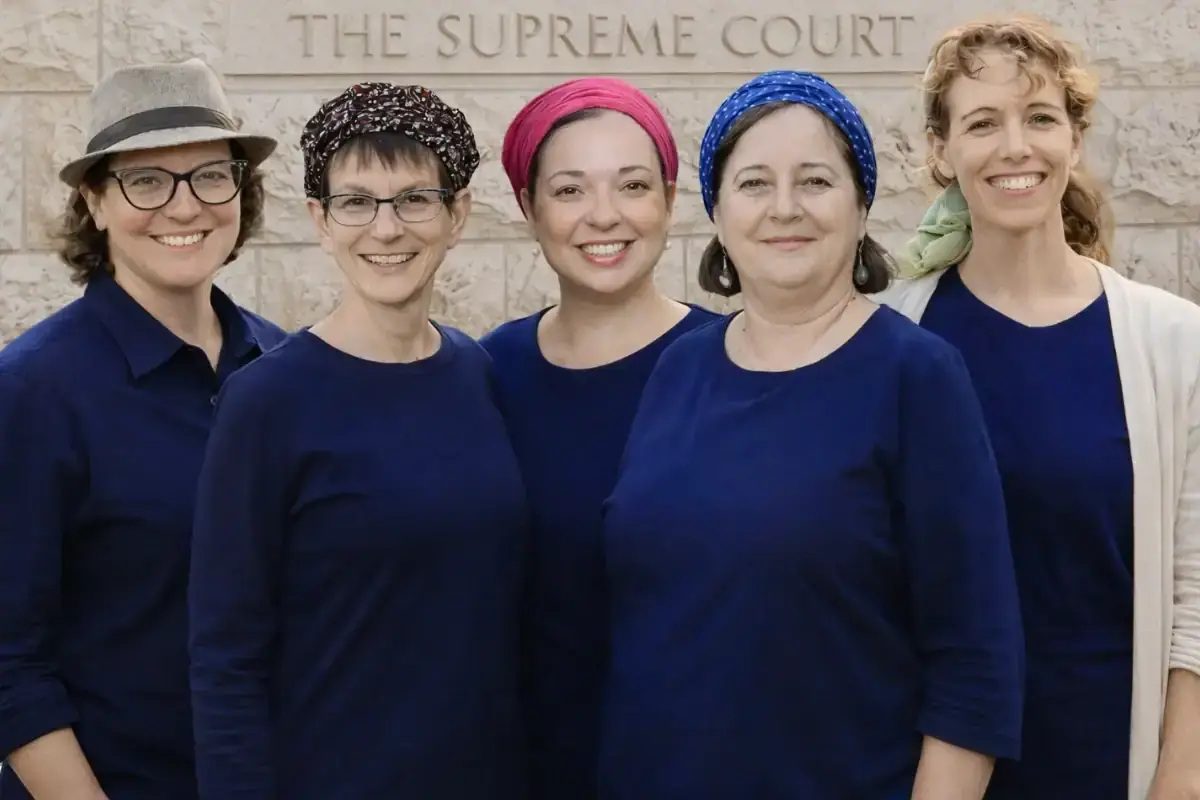

In a joint article published in Makor Rishon, Rabbanit Sarah Segal-Katz and Rabbanit Dr. Channa Adler-Lazarovich offered sharp criticism of the state of sanitation and oversight in Israeli mikvaot, especially during the COVID-19 pandemic. They warned that, unlike other halakhic issues addressed during the crisis, immersion was prioritized above pikuach nefesh, with longstanding sanitary failings ignored and public transparency lacking. The authors stressed that from a halakhic perspective, ritual immersion must never supersede the safeguarding of human life, and that the true obligation lies in protecting health, in line with the principle of “ve-chai bahem” (“you shall live by them”).
Segal-Katz and Adler-Lazarovich called for systemic reform, including the temporary closure of unsafe mikvaot, the establishment of clear supervisory mechanisms, and full transparency for those who immerse. They noted that the prevailing perception of mikvaot as a “backyard” issue and the absence of women’s representation on religious councils exacerbate both neglect and concealment. Their article argues that meaningful repair requires collaboration among all stakeholders—women immersing, attendants, rabbis, rabbanit, government ministries, and civic organizations—so that the mitzvah of taharat hamishpacha may be observed in safety, health, and with genuine communal responsibility.
We maintain that criticism should be directed toward those responsible for the fact that many mikvaot remain unsafe, not toward those who brought this information to public awareness. The policy adopted by other civic actors engaged in the matter—publicly declaring immersion to be safe on the one hand, while working intensively to fix problems “behind the scenes” on the other—succeeded in improving conditions in some locations, but also allowed immersion to continue elsewhere where they had no influence. Partial repair of deficiencies, without involving the women who immerse and without transparency in the process, deprived the immersers themselves of essential knowledge and of the ability to choose when and where to immerse. In the end, such concealment serves primarily the system itself, which is reluctant to expose its failings or invest in their correction.
We believe that collaboration among women immersing, attendants, rabbis, rabbanit, and those engaged in taharat hamishpacha can move the system toward correcting these deficiencies. Repair is necessary both for times of normalcy and in moments of crisis, such as during a pandemic.
We expect the religious-Zionist community to demonstrate civic responsibility and to advance a systemic solution that will benefit all women immersing and all attendants. We hope that this work will help heal the system of its longstanding flaws, and will enable every woman in Israel to continue fulfilling the mitzvah of taharat hamishpacha while safeguarding her health and halakhic commitment—together with a sense of security and genuine joy.